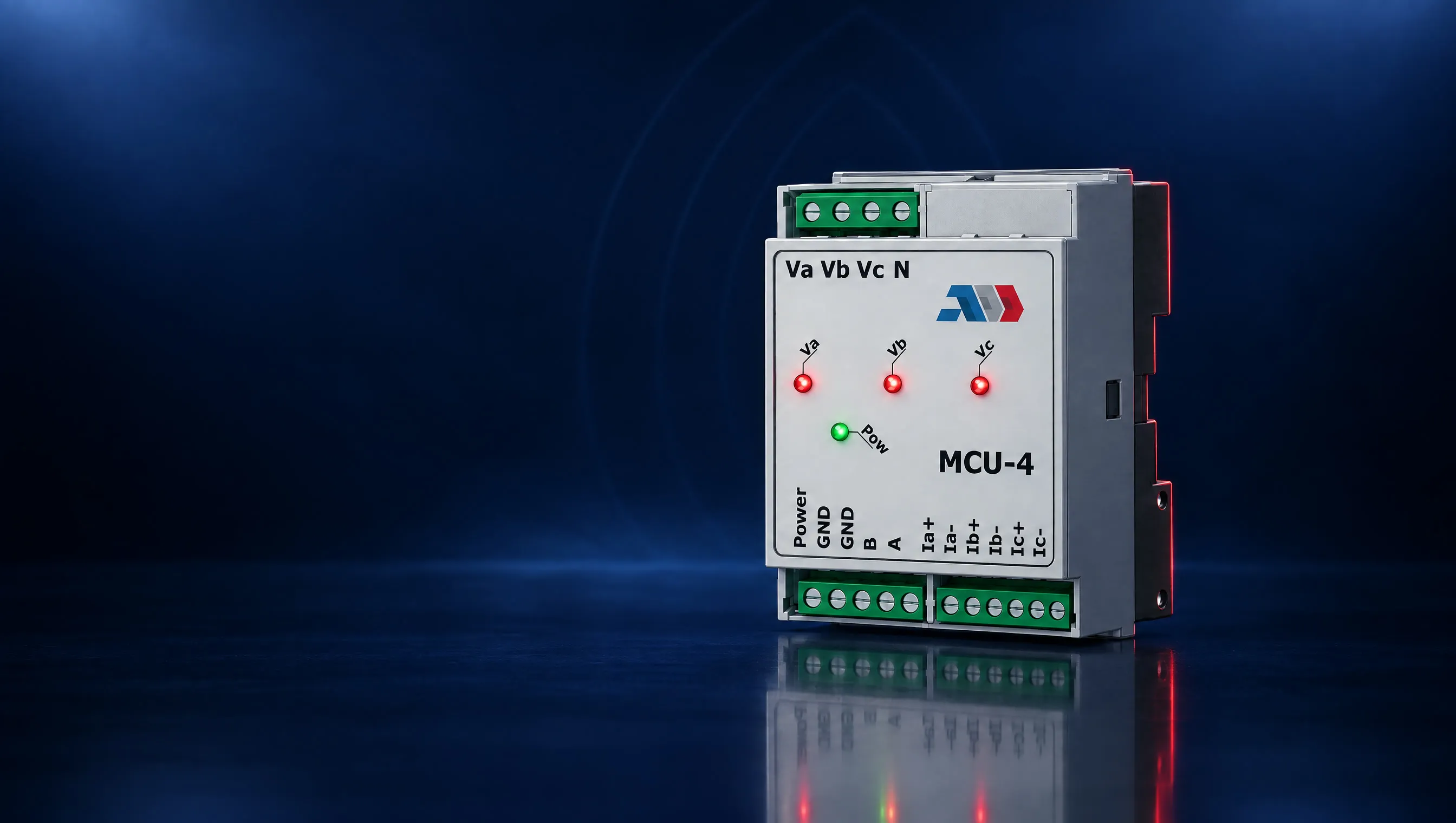
- 3P+N / 1P+N
- Pole configuration
- U, I, P, cos φ, E
- Measured parameters
- ±1 %
- Active power accuracy
- RS485
- Modbus RTU
Overview
Where it works
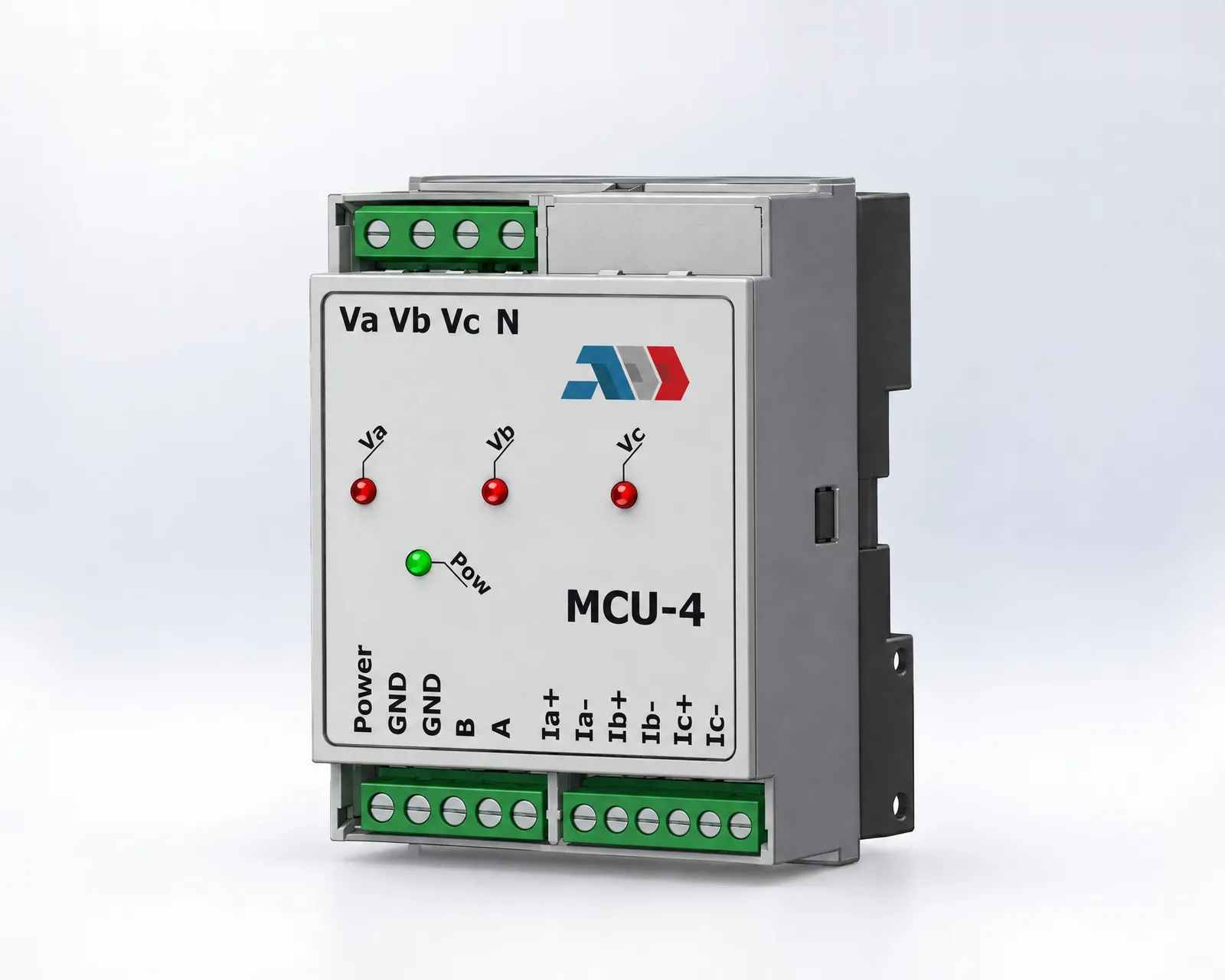
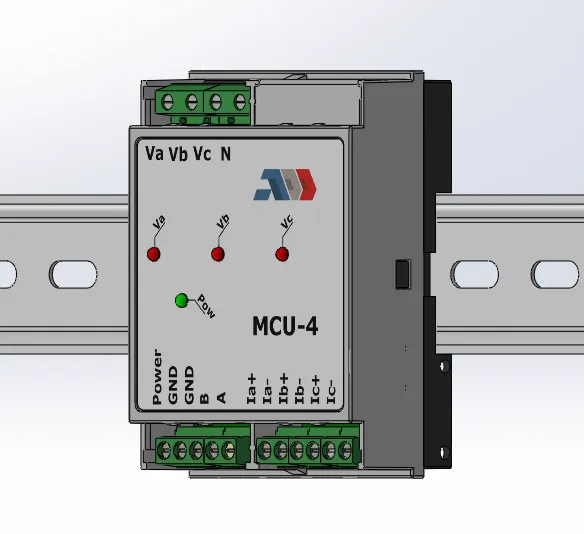
MCU-4 is a three-phase network analyser for DIN rail mounting. It measures the RMS phase voltage up to 260 VAC, the RMS phase current up to 50 A AC, the active, reactive and apparent power of each phase, the power factor (cos φ) of each phase and the accumulated energy. The measured values are read from Modbus RTU registers over RS485, and an LED for each phase lights when voltage is present.
Mounting: 35 mm DIN rail (IEC 60715)
- Measuring voltage, current, power, power factor and accumulated energy of different loads
- Checking in real time that the required voltages and currents are present in different parts of the electrical circuit
- Remote monitoring of voltage, current and power in SMART and SCADA systems
Datasheet
Technical data
Power supply
- Supply voltage
- 9 to 36 VDC
- Consumption
- max. 50 mA
Measurement inputs
- Pole configuration
- 3P+N / 1P+N
- Measured parameters
- U, I, P, cos φ, E
- Voltage range
- 0 to 260 VAC
- Frequency range
- 45 to 65 Hz
- Voltage input isolation
- 4 kVAC
- Current range
- 50 A AC (with current transformer ZEMCTK05-2)
- Active power accuracy
- ±1 %
- Measured energy
- Active, reactive and apparent
- Energy accuracy
- Class 1.0 or "B" according to MID
Communication
- Interface
- RS485
- Protocol
- Modbus RTU
- Baud rate
- 9600, 19200, 57600, 115200default 9600
- Parity
- 8N1, 8E1, 8O1, 8N2default 8N1
- Device address
- 1 to 127default 1
Environment
- Operating temperature
- -20 to 60 °C
- Storage temperature
- -20 to 80 °C
- Relative humidity
- below 95 %, non-condensing
Status LEDs
- GreenOnInput voltage present for the module
- RedOnVoltage present on the voltage inputs (above 36 VAC)
- RedOffNo voltage on the voltage inputs (below 36 VAC)
Integration
Modbus registers
The full register map of the module. Filter by address, name or description.
Input registers
| Register | Name | Type | Description | Values | Default |
|---|---|---|---|---|---|
| 301 | Device type | uint16_t | Device type code (MCU-4 = 10051) | 10051 | |
| 302 | HW version | uint16_t | Hardware version of the device | 010 = HW version 3.0 | |
| 303 | SW version | uint16_t | Software version of the device | 010 = SW version 3.0 | |
| 304 | Serial number high byte | uint16_t | Serial number of the device, high byte | ||
| 305 | Serial number low byte | uint16_t | Serial number of the device, low byte | ||
| 331 | Voltage A | uint16_t | RMS phase voltage A | Real value = Data / 10, V | |
| 332 | Voltage B | uint16_t | RMS phase voltage B | Real value = Data / 10, V | |
| 333 | Voltage C | uint16_t | RMS phase voltage C | Real value = Data / 10, V | |
| 334 | Current A | uint16_t | RMS phase current A | Real value = Data / 100, A | |
| 335 | Current B | uint16_t | RMS phase current B | Real value = Data / 100, A | |
| 336 | Current C | uint16_t | RMS phase current C | Real value = Data / 100, A | |
| 337 | Active power A | uint16_t | Active power of phase A | Watts | |
| 338 | Active power B | uint16_t | Active power of phase B | ||
| 339 | Active power C | uint16_t | Active power of phase C | Watts | |
| 340 | Power factor A | uint16_t | Power factor (cos φ) of phase A | Real value = Data / 1000 | |
| 341 | Power factor B | uint16_t | Power factor (cos φ) of phase B | Real value = Data / 1000 | |
| 342 | Power factor C | uint16_t | Power factor (cos φ) of phase C | Real value = Data / 1000 | |
| 343 | Direction A | uint16_t | Current direction in phase A | 0 = Forward 1 = Reverse | |
| 344 | Direction B | uint16_t | Current direction in phase B | 0 = Forward 1 = Reverse | |
| 345 | Direction C | uint16_t | Current direction in phase C | 0 = Forward 1 = Reverse | |
| 346 | Forward Energy Low | uint16_t | Forward energy, low register (EnergyFL) | FE: Forward energy = [EnergyFH] * 65536 + [EnergyFL], in 0.1 kWh | |
| 347 | Forward Energy High | uint16_t | Forward energy, high register (EnergyFH) | FE: Forward energy = [EnergyFH] * 65536 + [EnergyFL], in 0.1 kWh | |
| 348 | Reverse Energy Low | uint16_t | Reverse energy, low register (EnergyRL) | RE: Reverse energy = [EnergyRH] * 65536 + [EnergyRL], in 0.1 kWh | |
| 349 | Reverse Energy High | uint16_t | Reverse energy, high register (EnergyRH) | RE: Reverse energy = [EnergyRH] * 65536 + [EnergyRL], in 0.1 kWh | |
| 350 | Total Energy Low | uint16_t | Total energy, low register (EnergyTL) | TE: Total energy = [EnergyTH] * 65536 + [EnergyTL], in 0.1 kWh | |
| 351 | Total Energy High | uint16_t | Total energy, high register (EnergyTH) | TE: Total energy = [EnergyTH] * 65536 + [EnergyTL], in 0.1 kWh |
No register matches the filter.
Holding registers
| Register | Name | Type | Description | Values | Default |
|---|---|---|---|---|---|
| 401 | Device slave address | uint16_t | Modbus device address | 1 to 127 | 1 |
| 402 | MODBUS baud rate | uint16_t | Modbus communication baud rate | 0 = 9600 1 = 19200 2 = 57600 3 = 115200 | 0 |
| 403 | MODBUS parity | uint16_t | Parity check mode | 0 = 8N1 1 = 8E1 2 = 8O1 3 = 8N2 | 0 |
No register matches the filter.
Installation
Dimensions and connection
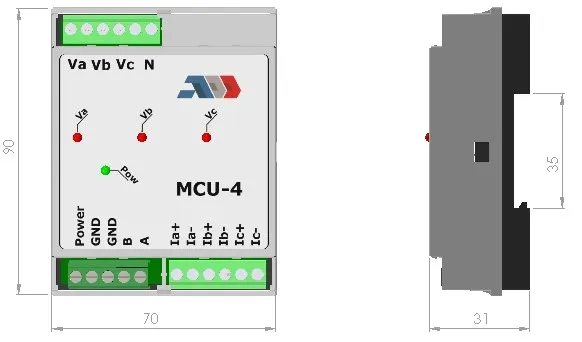
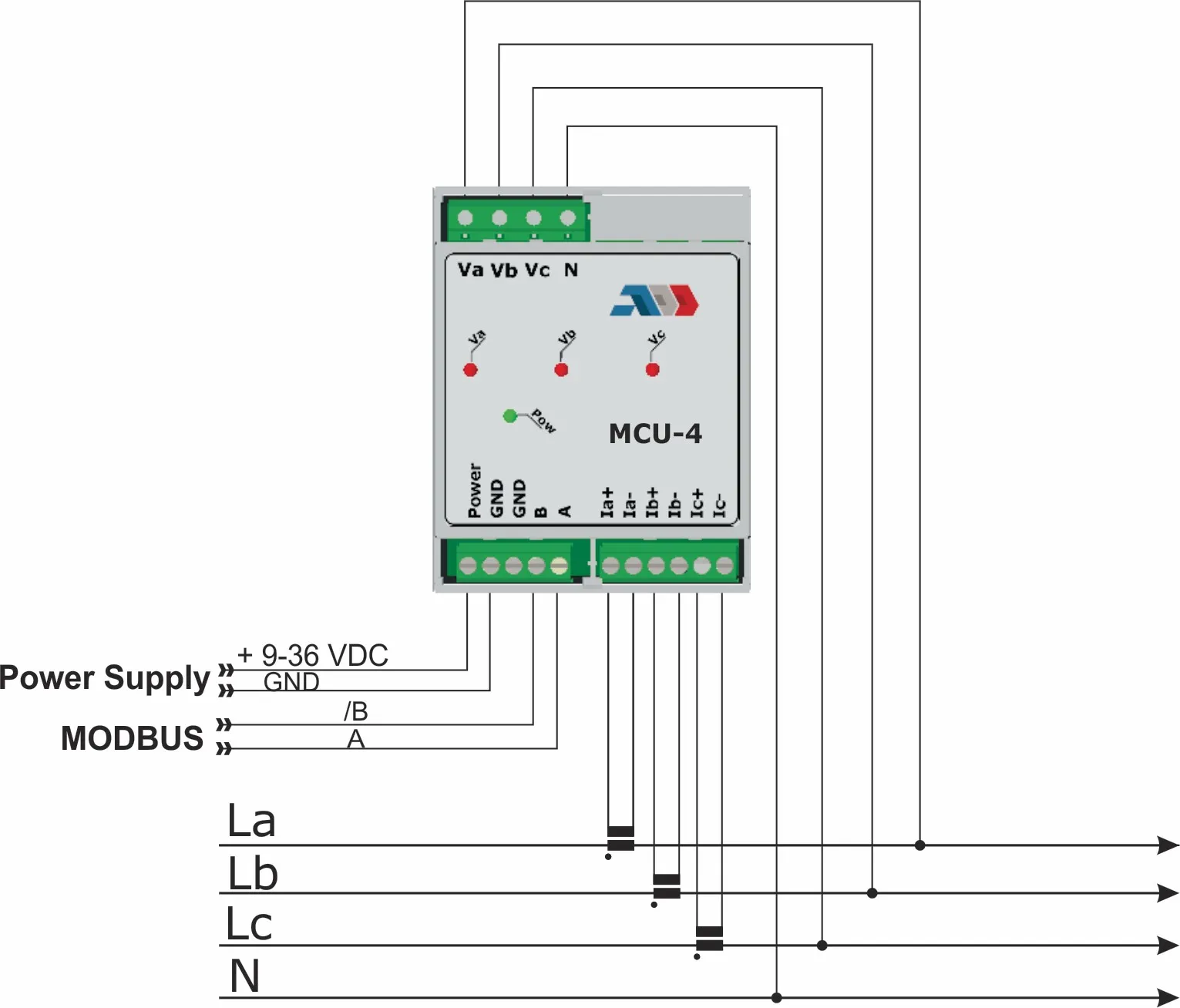
Systems
Used in

Street lighting
Street lighting management
Control and monitor street lighting cabinets from one system, with schedules that follow sunrise and sunset, measurements per phase and alarms for every cabinet.
Learn more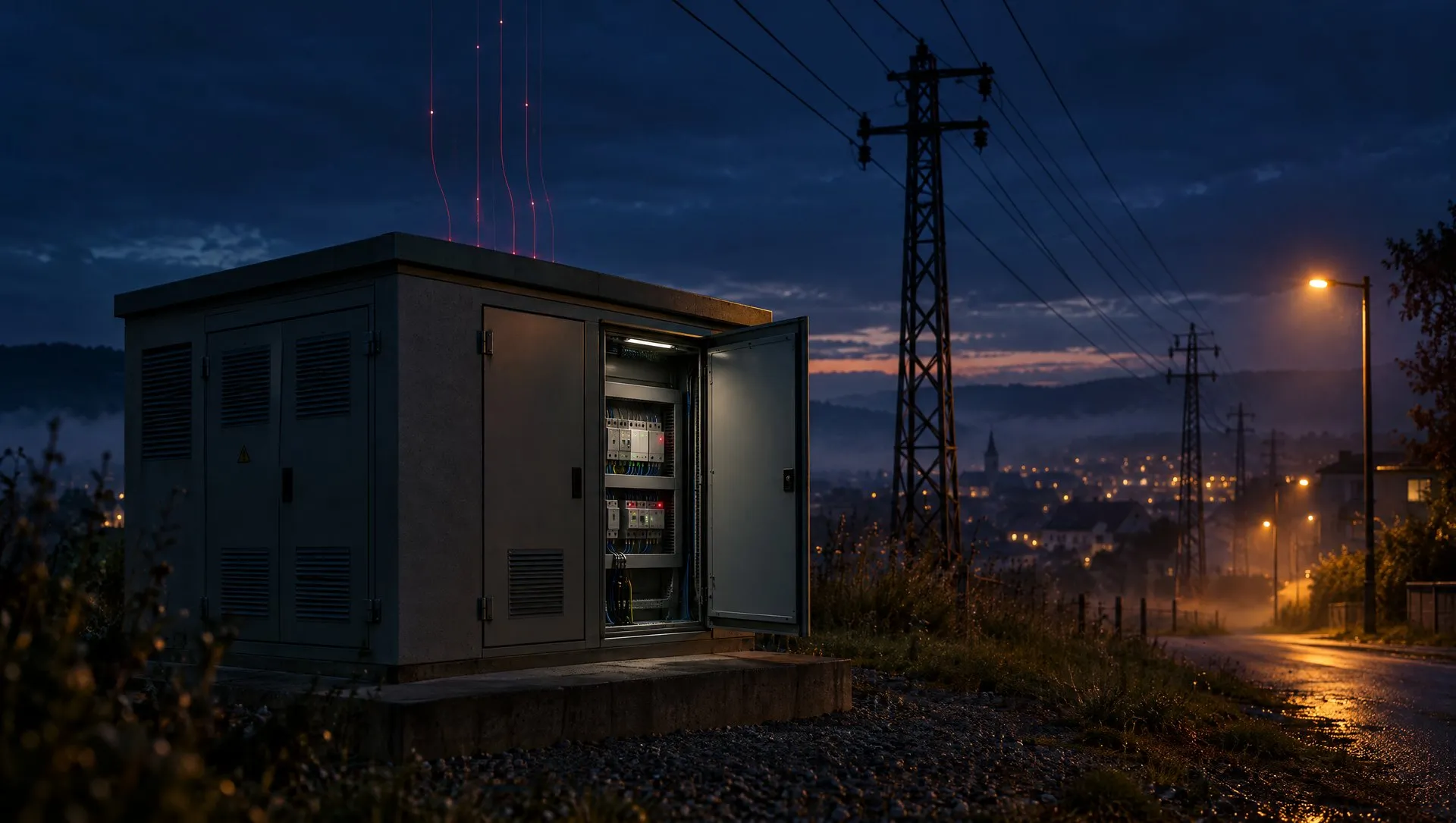
EIM
Electrical infrastructure monitoring
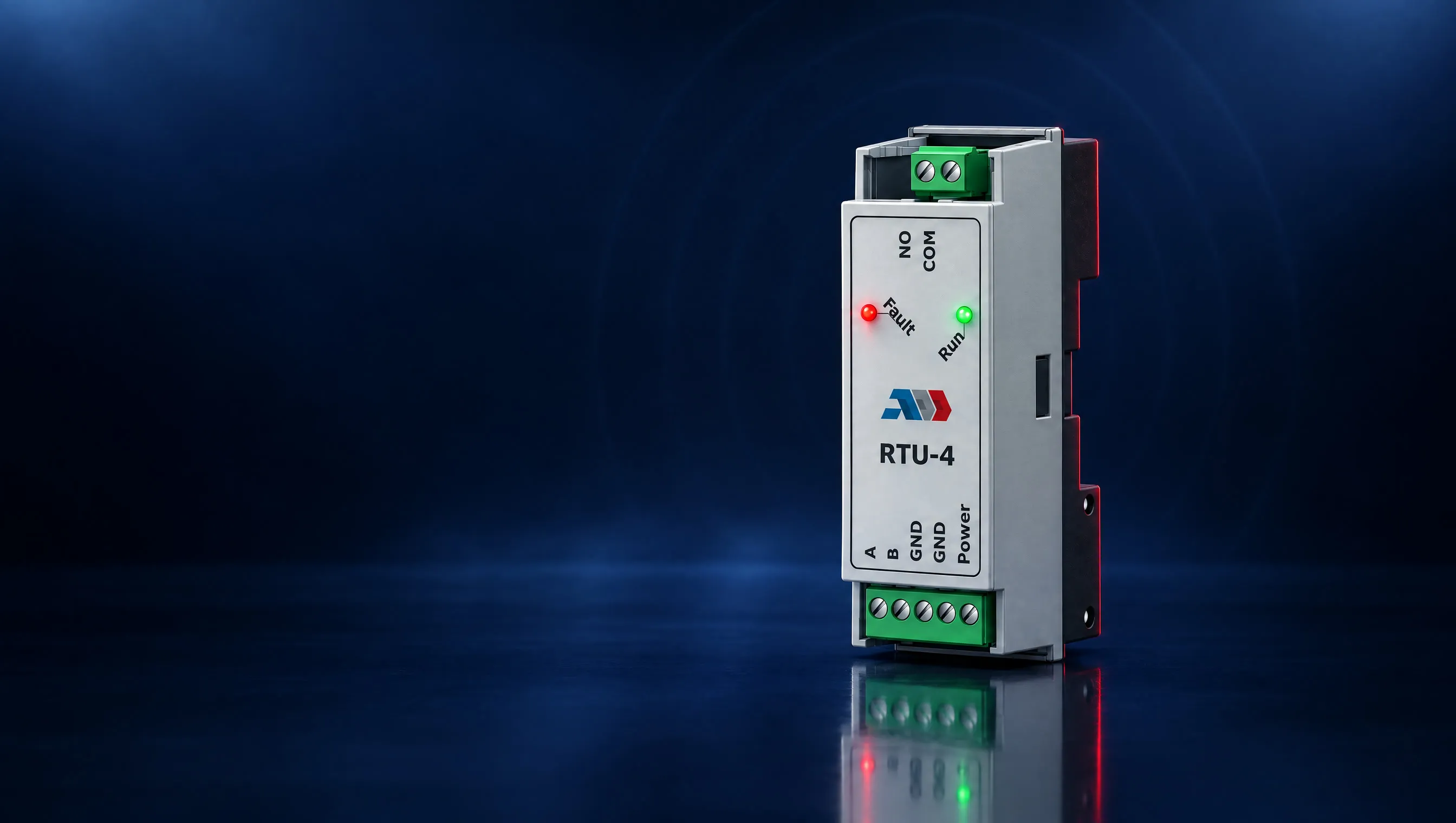
Sensors, analysers and a gateway turn a secondary substation into a monitored asset. The platform shows the transformer and the low-voltage board in real time, with alarms and reports for the grid operator.
Learn more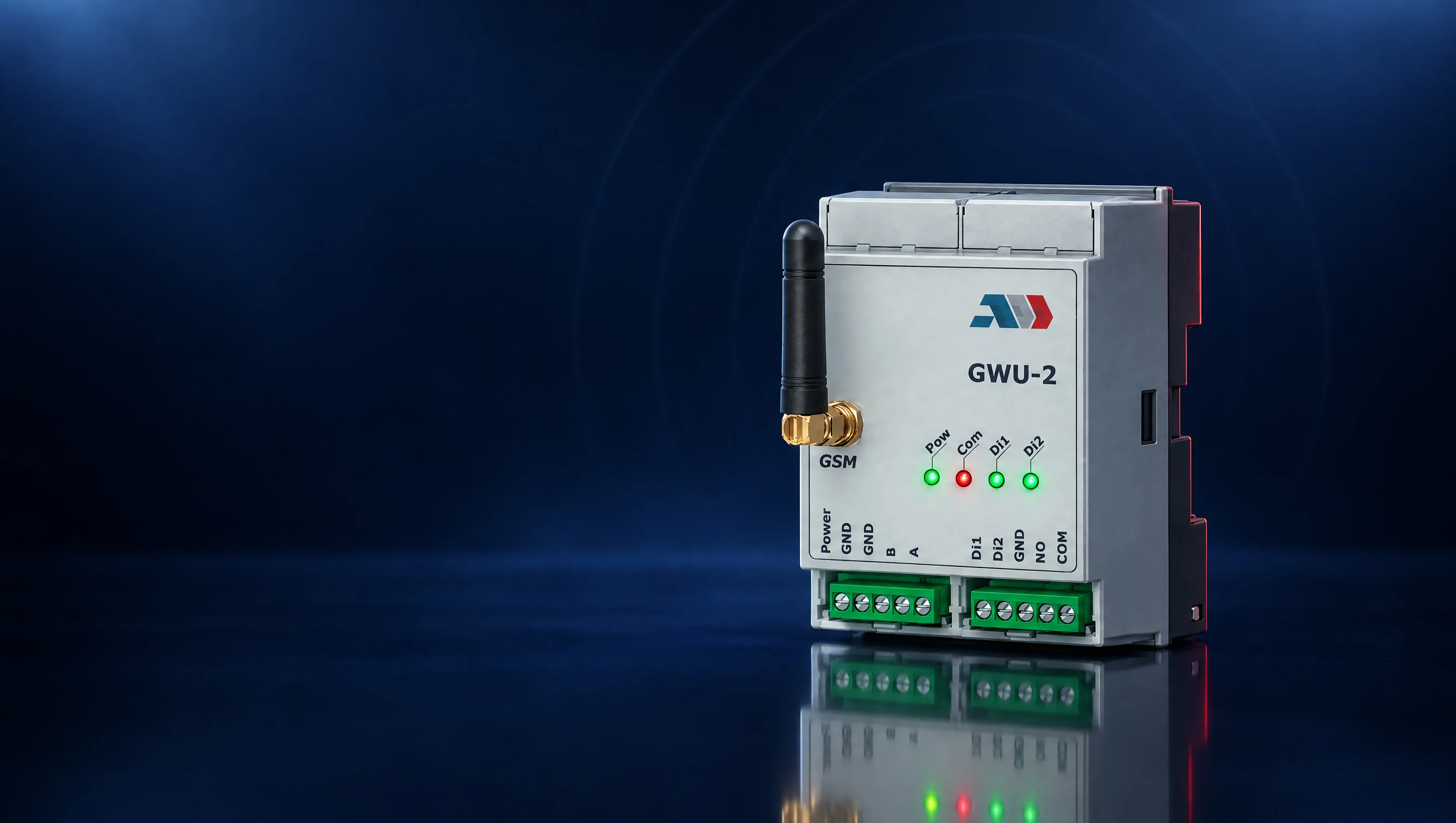
Transport, warranty and maintenance
- Transport and storage
- Protect the module from shocks and avoid extreme conditions. Store it in the original packaging.
- Warranty
- Two years from the date of manufacture against manufacturing defects. Modifications to the product after the publication date of its documentation release the manufacturer from liability. The manufacturer is not responsible for typographical or other errors in the documentation.
- Maintenance
- Under normal conditions the module needs no maintenance. Light dirt comes off with a dry or slightly damp cloth; for heavier dirt use non-aggressive cleaning products. Always disconnect the power supply first, keep liquids out of the housing and reconnect the power only when the module is completely dry.
Ask for a MCU-4 quote
Tell us the quantity and the project. We answer with a price and lead time.