Skip to content

Stop paying to heat and cool empty rooms

GridBit OccuSense controls the energy of a hotel by the real occupancy of its rooms. Presence sensors tell the platform which rooms are in use, automation sets the climate of each room to match, and the evidence for the EPBD requirements builds up along the way.

  • No cameras, no microphones
  • Retrofit without new cables
  • Works with or without a PMS
15 %+
target for lower HVAC consumption, proven on your own data in the pilot
1 floor
is enough to start, the rest of the hotel works as usual
0
cameras, microphones or guest identities
4
EPBD topics tracked: BACS, indoor air quality, SRI and MEPS 2030

Why

Where a hotel room loses energy

01

Energy left on

Guests leave the air conditioning and the lights on when they go out. The room is conditioned for hours with nobody in it.

02

Automation that needs a renovation

A classic building management system needs new cabling, chased walls and rooms taken out of sale while the work goes on.

03

Sensors that miss a sleeping guest

A plain motion sensor sees no movement at night and turns the climate off on a guest who is asleep.

04

Split units with a remote only

Older air conditioners take commands from an infrared remote and never confirm that they obeyed.

Occupancy reality check

Your PMS knows the bookings, not the rooms

The property management system shows 18 rooms as occupied. Tonight guests are in 12 of them. The air conditioning runs in the other six as well, and you pay for it every night.

  1. 01What the PMS shows
  2. 02What the sensors see
  3. 03What OccuSense does
  • Booked, climate on
  • In use
  • Empty, climate still on
  • Empty, eco mode

18 rooms booked, 18 rooms conditioned.12 rooms in use. Six are conditioned for nobody.The six empty rooms go to eco mode until the guest returns.

18
Booked in the PMS
?
In use, by the sensors
?
Conditioned for nobody

The example from the OccuSense brochure, not measured data.

Illustration of a hotel room

How it works

A room that knows whether someone is in

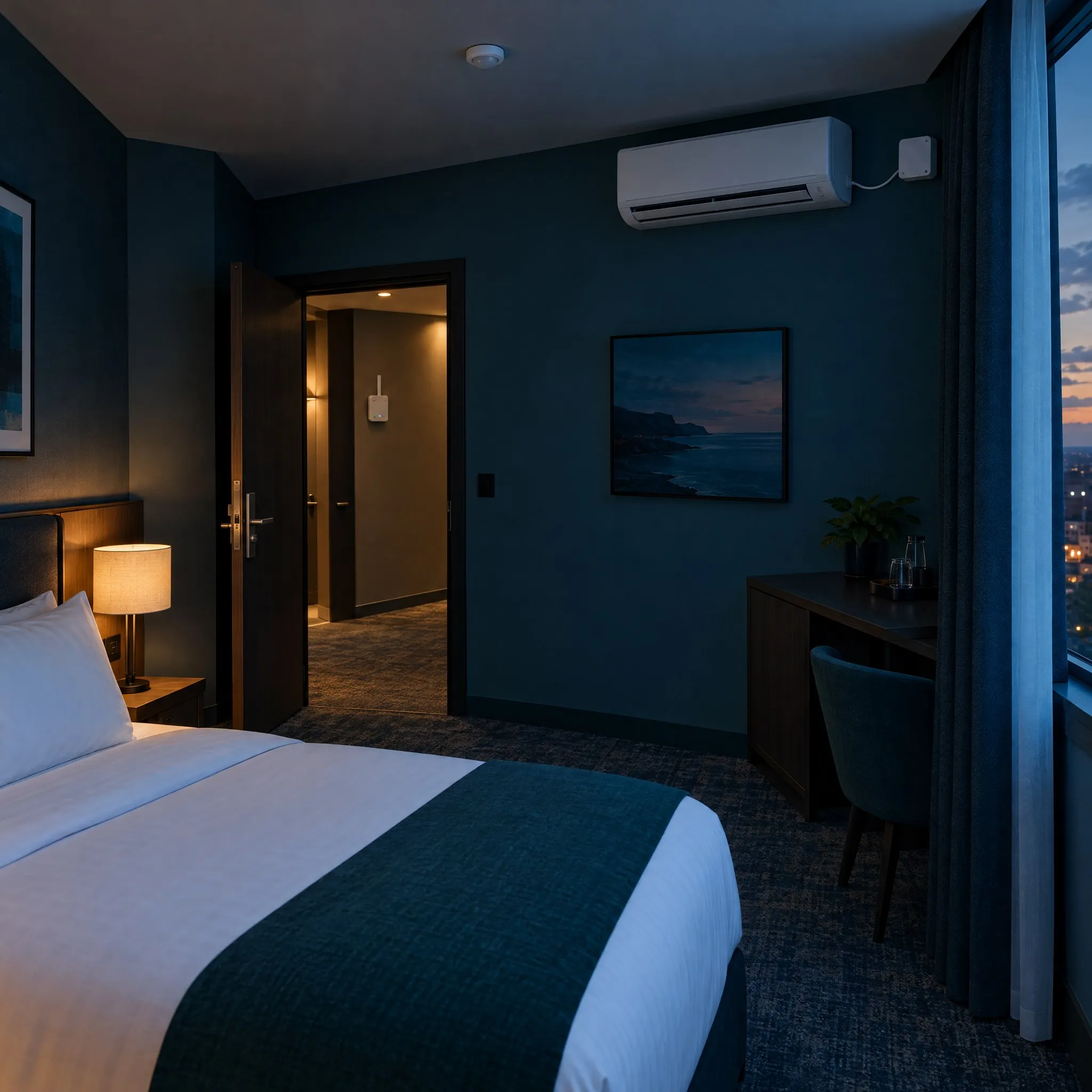
Three small devices do the work: a sensor on the ceiling, an actuator at the air conditioner and a gateway in the corridor. They talk by radio, so no wall is opened and no new cable is pulled.

01Ceiling sensor

Presence, even when the guest sleeps

The sensor combines three methods. A passive infrared element wakes it at the first movement. A millimetre-wave radar picks up movements as small as breathing. A CO₂ sensor confirms that someone is in the room during deep sleep. It has no camera and no microphone.

  • Passive infrared (PIR)
  • mmWave radar
  • CO₂ sensor
  • No camera, no microphone

02Actuator

A controller next to the air conditioner

The actuator sits at the indoor unit and runs on mains power. It receives the presence signal over a short radio link inside the room. It commands the unit by infrared, like the remote control, or through a relay. A current clamp and a temperature probe tell it whether the unit really did what it was told.

  • Infrared or relay
  • Current clamp
  • Temperature probe
  • BLE inside the room

03Gateway

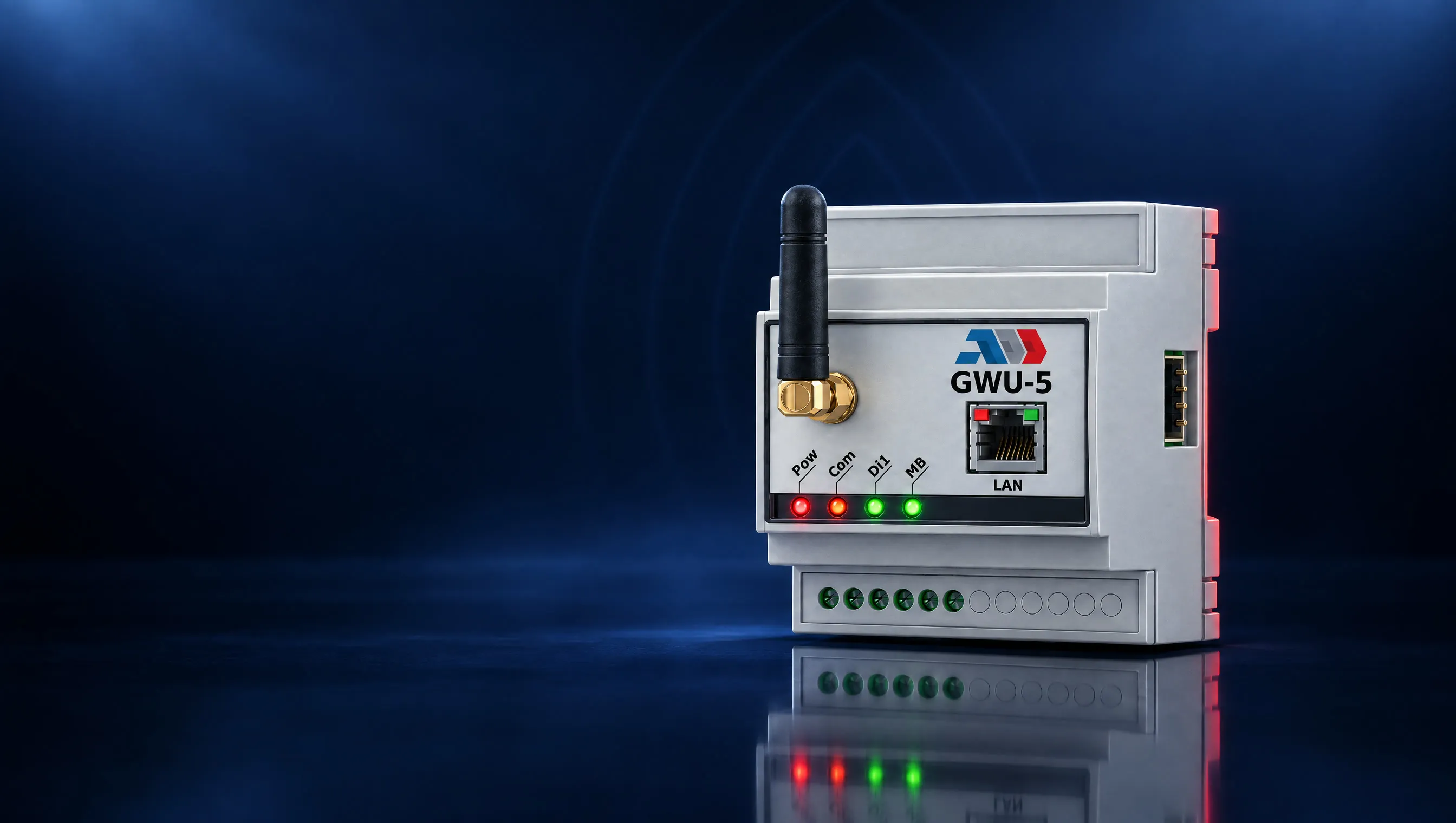
One gateway for the floor

The actuators reach a gateway in the corridor over sub-GHz radio at 868 MHz, which passes through hotel walls. A small hotel can work with a single gateway. It connects to the platform over Ethernet with MQTT over TLS and can exchange data with an existing BMS over Modbus or BACnet.

  • 868 MHz radio
  • Ethernet, PoE
  • MQTT over TLS
  • Modbus, BACnet

04Decision

From presence to the right mode

The room is in use: the climate goes to comfort. The room has been empty for a while: it goes to eco. The rules are yours, and a test mode replays them on past data before they touch a real room. When a guest takes manual control, the scenario steps back.

  • Comfort
  • Eco
  • Test mode
  • Guest override

05Platform

The whole hotel in one place

The data goes to the GridBit platform, hosted in the EU. It opens in a browser, on a phone as well, and shows rooms, energy, comfort and equipment together.

  • SaaS
  • EU hosting
  • GDPR

Installation

Room by room, while the hotel works

Every device carries an NFC tag and a QR code with its unique identifier. Pairing takes a tap of the phone, so nobody types serial numbers and nobody mixes up the rooms. The target is under an hour per room.

  1. 01

    Identifier

    Each device arrives with a passive NFC tag and a QR code.

  2. 02

    Mounting

    The technician mounts the sensor and the actuator in the room.

  3. 03

    Tap

    They pick the room in the app and tap the phone on each device.

  4. 04

    Mapping

    The platform maps the devices to the room and sends the table to the gateway.

The platform

From the lobby view down to one room

Pulse: is there anything to handle today?Every room on the floor planWhy this room uses more than its neighboursWhere the kilowatt-hours leakThe plant room, machine by machine

Pulse: is there anything to handle today?

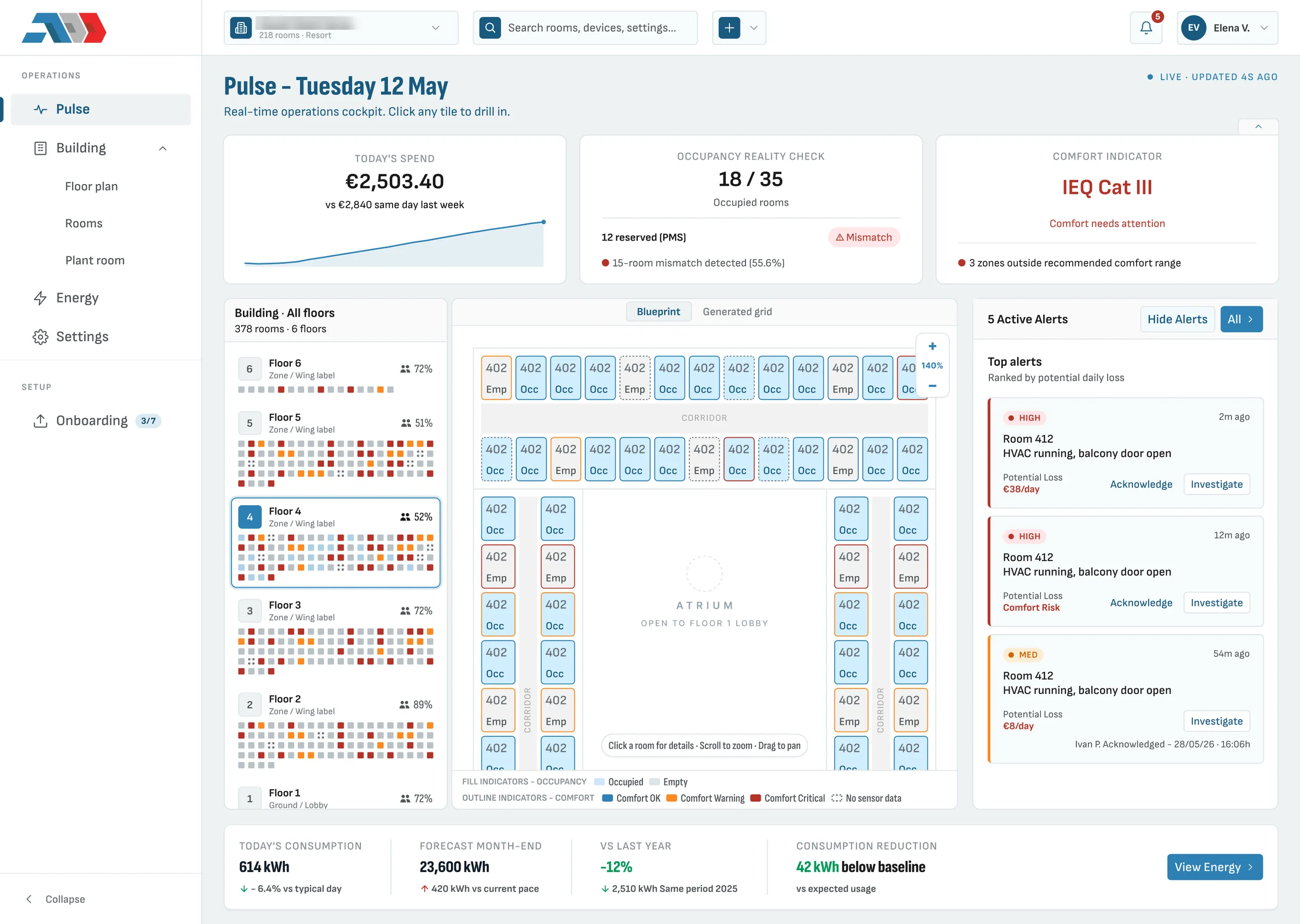
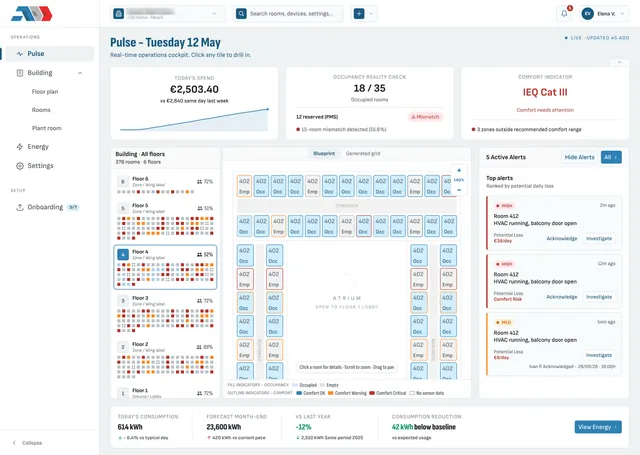
The daily cockpit: rooms in use by the sensors against rooms reserved in the PMS, with the mismatch spelled out. Next to it the consumption of the day, the comfort category and the alerts, ranked by daily cost.

Every room on the floor plan

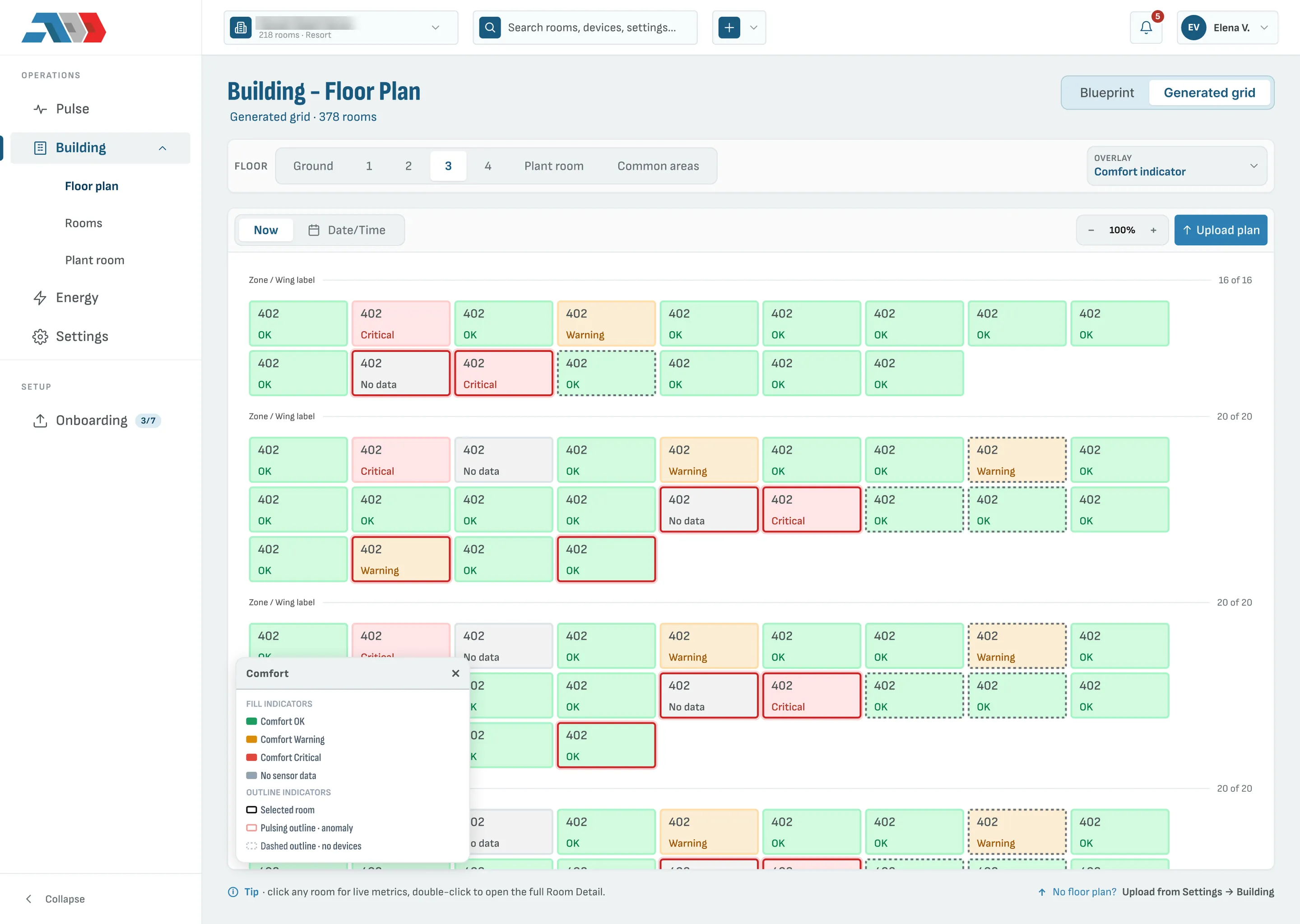
Floor by floor, as a blueprint or a generated grid, with one overlay at a time: occupancy, comfort, energy or device health. A room with an anomaly gets a pulsing outline.

Why this room uses more than its neighbours

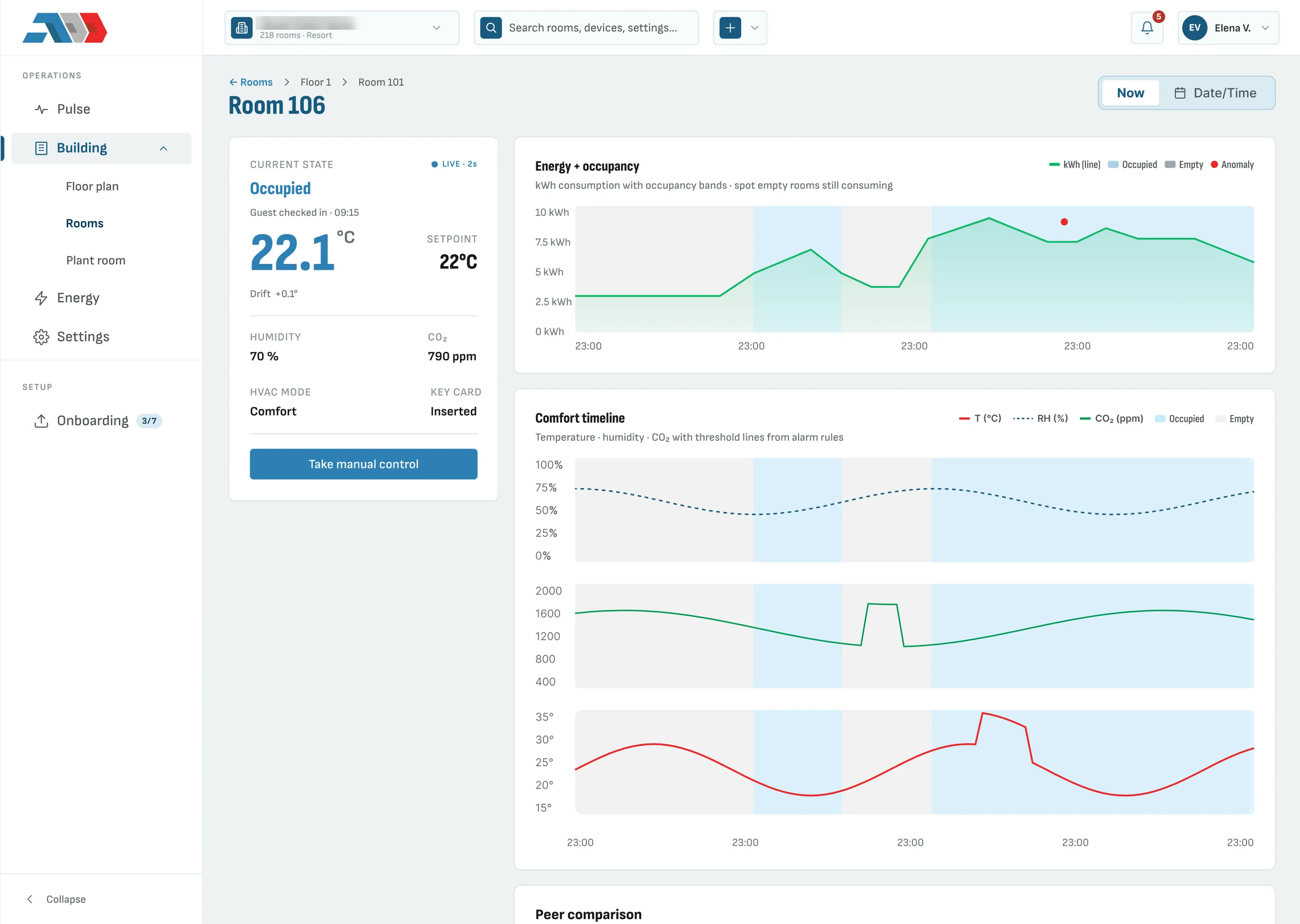
Energy and occupancy share one chart, so an empty room that still consumes stands out. Below it temperature, humidity and CO₂ against the alarm thresholds. Manual control is one button and goes to the audit log.

Where the kilowatt-hours leak

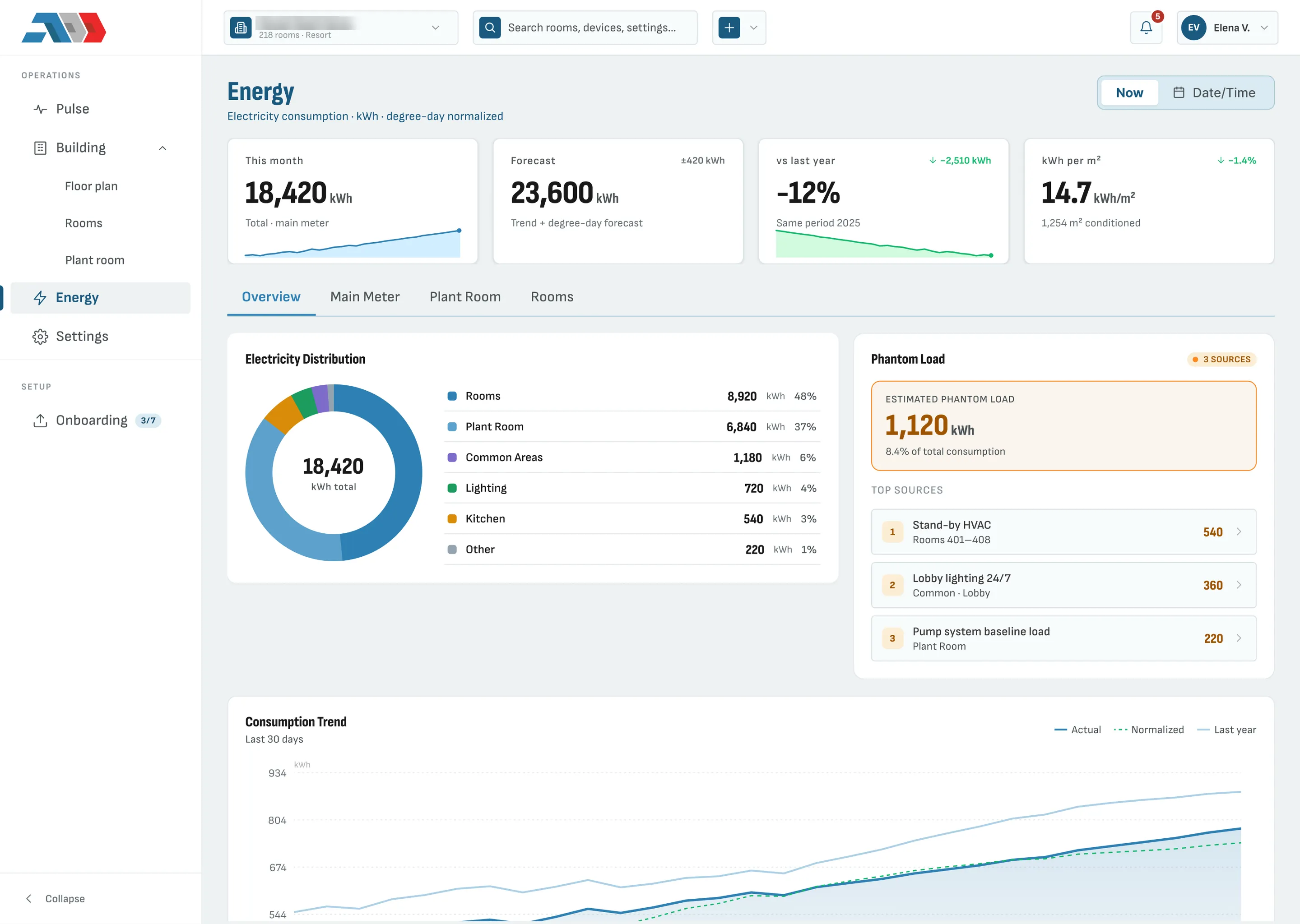
The month with a forecast, compared with last year after degree-day normalisation, and the split by consumers. The phantom load detector names the stand-by sources, here stand-by HVAC in rooms 401 to 408.

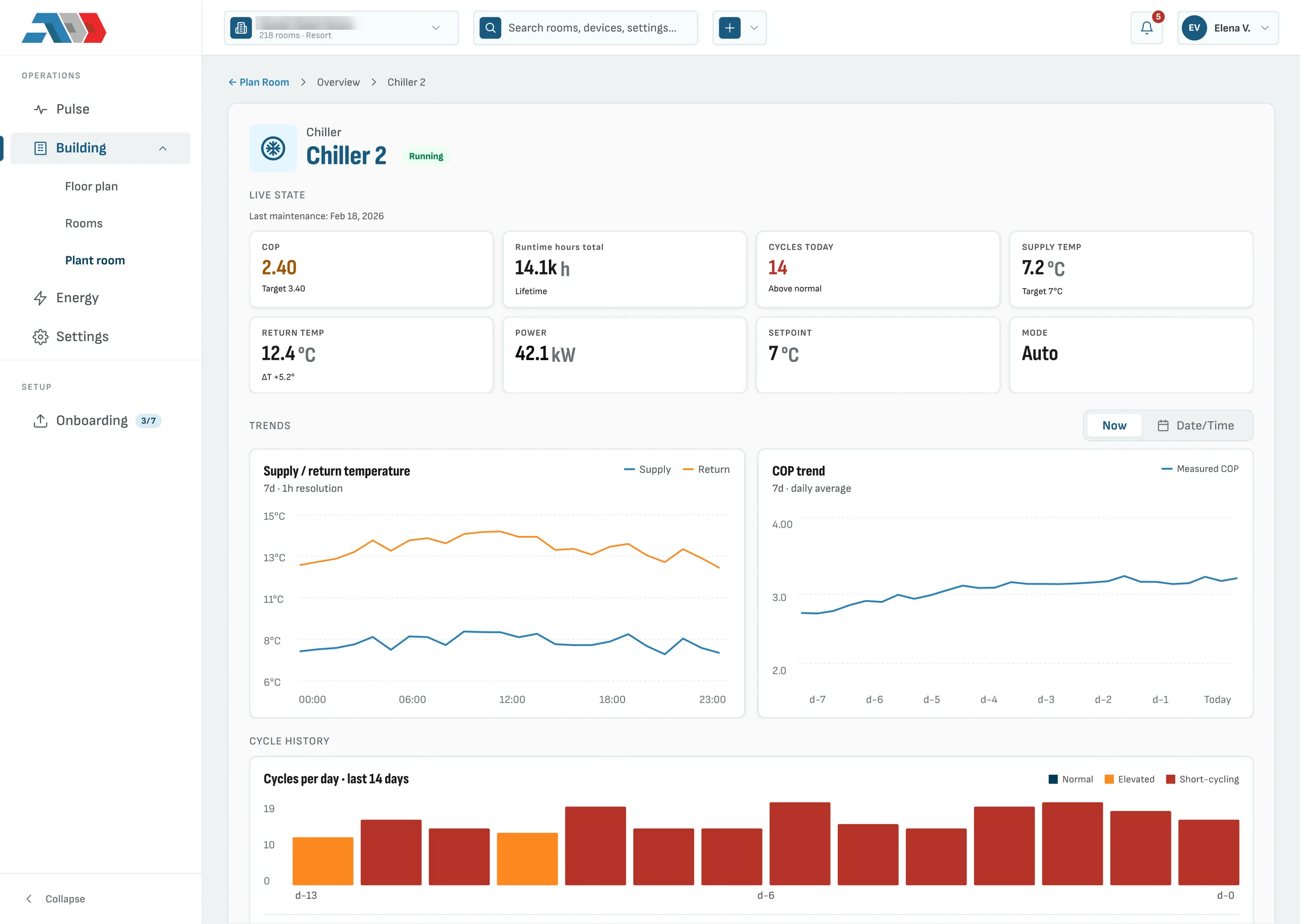
The plant room, machine by machine

Chillers, heat pumps and air handling units with COP, supply and return temperature, power and cycles per day. A chiller that short-cycles shows up in red long before it fails.

Keep scrolling

Screens from the interface design, with sample data.

The platform

From the lobby view down to one room

  1. Pulse: is there anything to handle today?

    Pulse: is there anything to handle today?

    The daily cockpit: rooms in use by the sensors against rooms reserved in the PMS, with the mismatch spelled out. Next to it the consumption of the day, the comfort category and the alerts, ranked by daily cost.

  2. Every room on the floor plan

    Every room on the floor plan

    Floor by floor, as a blueprint or a generated grid, with one overlay at a time: occupancy, comfort, energy or device health. A room with an anomaly gets a pulsing outline.

  3. Why this room uses more than its neighbours

    Why this room uses more than its neighbours

    Energy and occupancy share one chart, so an empty room that still consumes stands out. Below it temperature, humidity and CO₂ against the alarm thresholds. Manual control is one button and goes to the audit log.

  4. Where the kilowatt-hours leak

    Where the kilowatt-hours leak

    The month with a forecast, compared with last year after degree-day normalisation, and the split by consumers. The phantom load detector names the stand-by sources, here stand-by HVAC in rooms 401 to 408.

  5. The plant room, machine by machine

    The plant room, machine by machine

    Chillers, heat pumps and air handling units with COP, supply and return temperature, power and cycles per day. A chiller that short-cycles shows up in red long before it fails.

Screens from the interface design, with sample data.

Savings

Estimate it for your hotel

Move the sliders. The model multiplies the energy saved per occupied room per day by your rooms and your occupancy. It is an estimate: the pilot replaces it with numbers measured in your building.

Energy saved per year

208,050kWh

HVAC 175,200 kWhLighting 32,850 kWh

41,610
per year
3,468
per month
83.2 t
tonnes of CO₂ per year

Assumptions of the model: 8 kWh of HVAC and 1.5 kWh of lighting saved per occupied room per day, 0.40 kg of CO₂ per kWh. Change them to match your building.

EPBD

The evidence builds up while the hotel runs

The recast Energy Performance of Buildings Directive has been in force since 2024, and the member states write it into national law through 2026. It brings requirements for building automation, indoor air quality, the Smart Readiness Indicator and minimum energy performance towards 2030. OccuSense tracks all four from the same data it uses to run the rooms.

  1. 2024The recast EPBD enters into force
  2. 2026National law in the member states
  3. 2030Minimum energy performance standards

BACS

Building automation

The efficiency of the equipment, such as the COP of chillers and heat pumps, and anomalies like heating and cooling in the same zone. The result is a structured evidence pack.

IEQ

Indoor air quality

Temperature, humidity, CO₂ and fine particles per zone, rated by the categories of EN 16798-1. A public display in the lobby shows guests the air they breathe.

SRI

Smart Readiness Indicator

The score follows the EU method across nine domains. A simulation shows how many points a new service would add before you invest in it.

MEPS

MEPS 2030 and carbon

Energy per square metre after degree-day normalisation, the trajectory of the energy class towards 2030 and the CO₂ footprint by the emission factor of the grid.

The external auditor gets secure, time-limited, read-only access, and every visit is written to the audit log.

Modules

What is inside

01

Pulse

The daily cockpit: spend, real occupancy against the PMS and alerts by priority. "Is there anything to handle today?", answered in a minute.

02

Energy Cockpit

Consumption breakdown, phantom load detector and a simulator of the night setback.

03

Automation Studio

A visual builder of scenarios with ready hotel templates and a test mode.

04

Comfort Atlas

A comfort heatmap by zones and a public air quality display for the lobby.

05

Compliance Hub

BACS, SRI, MEPS and carbon: dashboards, history and reports.

06

Plant Room

State of chillers and heat pumps, COP trend and predictive maintenance.

For real hotels

Made for a building full of guests

  • Guest privacy

    No cameras, no microphones, no identity. The system knows only that a room is in use, never who is in it. Hosting in the EU, in line with GDPR.

  • Installation without disruption

    The pilot starts on a single floor after a survey on site. All other rooms keep working as usual.

  • Your equipment

    The survey defines the integrations with your HVAC, BMS and PMS. The platform also works without a PMS.

  • Comfort stays first

    You control the rules. A guest who takes manual control always wins over the scenario.

Pilot

Start with one floor

We install on one floor or wing and measure. You commit to the whole property only after you have seen the report.

Request a pilot
  1. 01

    Survey

    We walk the site and agree on the floor or wing, the HVAC and BMS integration and whether a PMS takes part.

  2. 02

    Installation

    The devices go in room by room. The rest of the hotel works as usual.

  3. 03

    Measurement

    Real occupancy, HVAC waste, air quality and the effect of automation, before and after.

  4. 04

    Report

    A report in kWh: the savings, the mismatch between occupancy and PMS, and a recommendation for the roll-out.

Why GridBit

  • An industrial IoT and SaaS platform that already runs smart-city infrastructure
  • Own sensors, controllers and gateways: one vendor for hardware and software
  • First commercial partner for Eastern Europe in the Siemens Xcelerator Marketplace

Hardware

  • Room devices that talk by radio and need no new cables
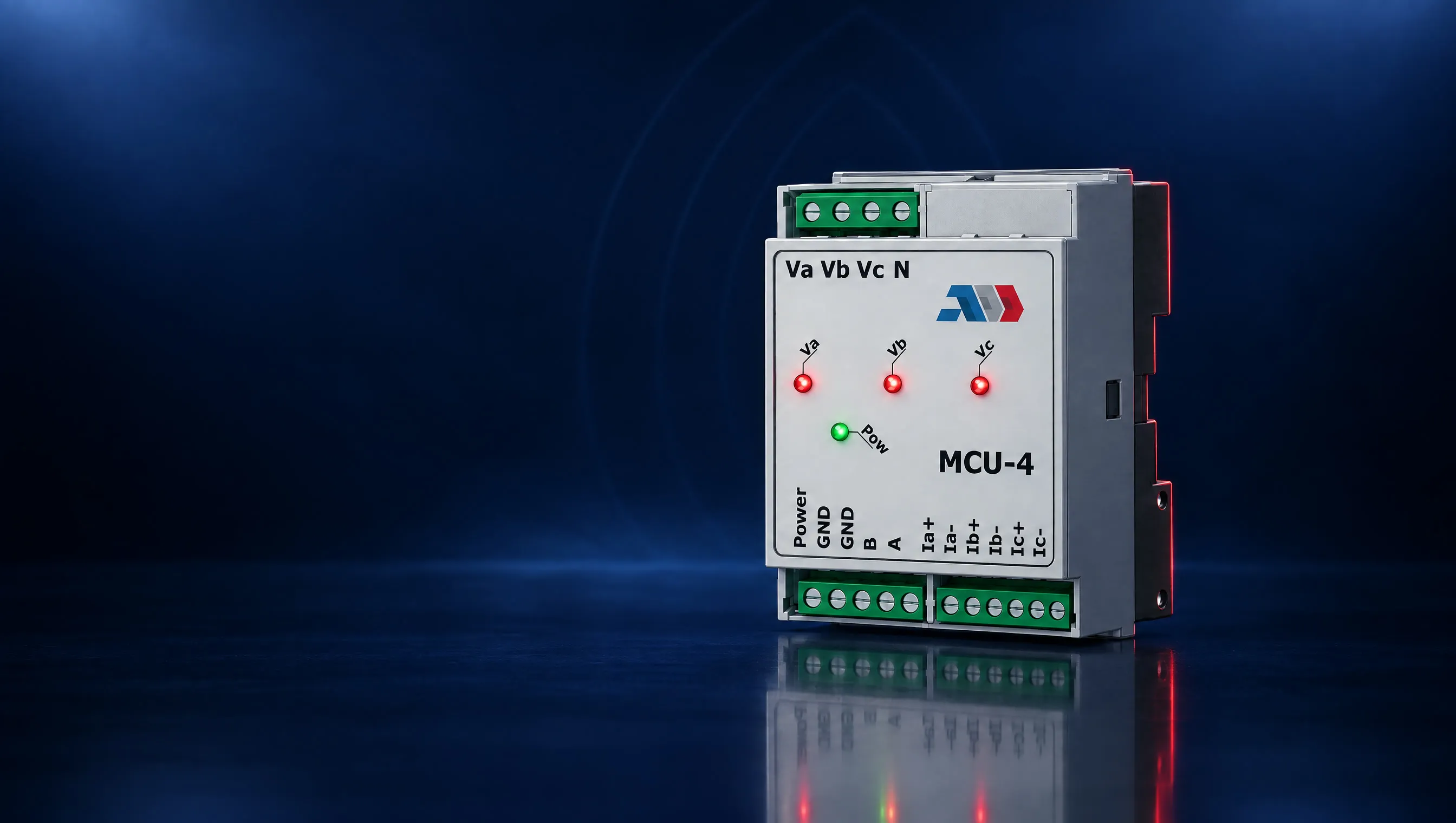
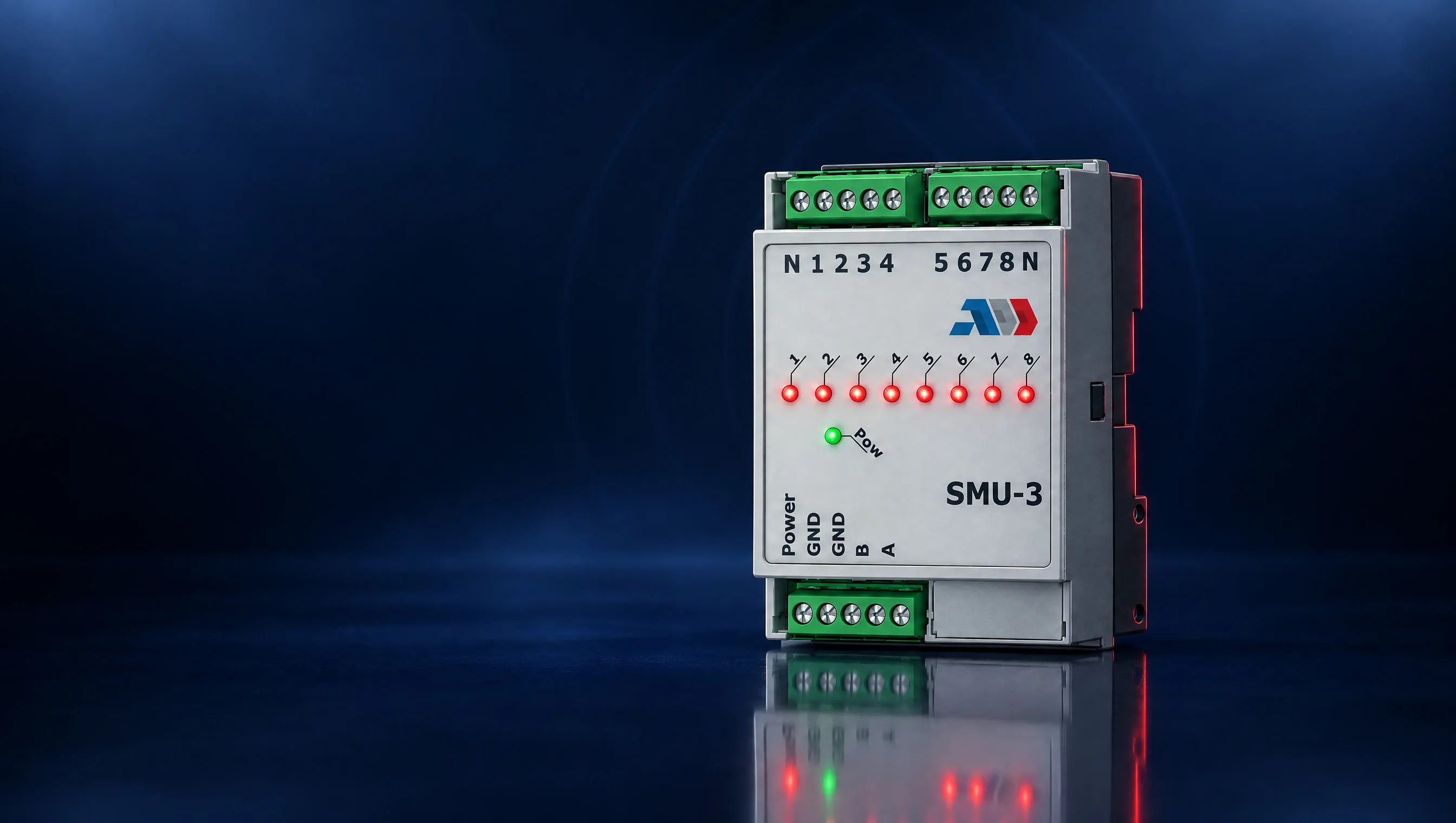
  • Sub-metering of the plant room and the main board with the Modbus devices of the GridBit catalogue
  • One platform for the rooms and for the equipment

In the room and on the floor

  • Ceiling sensorInfrared, mmWave radar and CO₂ in one housing. Mains or battery power.
  • HVAC actuatorInfrared or relay control with feedback from current and temperature. Mains powered, no batteries.
  • Floor gateway868 MHz to the rooms, Ethernet with PoE to the platform, RS485 to a BMS.

For sub-metering and the plant room

Questions

Short answers

Another question? Ask an engineer

What is OccuSense?

GridBit OccuSense controls the energy of a hotel by the real occupancy of its rooms. Presence sensors tell the platform which rooms are in use, automation sets the climate of each room to match, and the evidence for the EPBD requirements builds up along the way.

Does OccuSense use cameras or microphones?

No. The ceiling sensor has no camera and no microphone, and the system keeps no guest identities. It detects presence with a passive infrared element, a millimetre-wave radar and a CO₂ sensor.

How does the sensor notice a guest who is asleep?

It combines three methods. The millimetre-wave radar picks up movements as small as breathing, and the CO₂ sensor confirms that someone is in the room during deep sleep. A plain motion sensor would see no movement at night and turn the climate off.

Does the installation need new cables or closed rooms?

No. The sensor, the actuator and the floor gateway talk by radio, so no wall is opened and no new cable is pulled. The devices go in room by room while the hotel works, each one paired with a tap of the phone on its NFC tag. The target is under an hour per room.

Does it work with older split air conditioners?

Yes. The actuator commands the indoor unit by infrared, like the remote control, or through a relay. A current clamp and a temperature probe tell it whether the unit really did what it was told.

Do we need a property management system (PMS)?

No. OccuSense works with or without a PMS. With a PMS, the platform compares the rooms that are booked with the rooms that are really in use and shows the mismatch.

How does OccuSense help with the EPBD?

It tracks four EPBD topics from the same data it uses to run the rooms: building automation and control systems (BACS), indoor air quality, the Smart Readiness Indicator (SRI) and the minimum energy performance standards towards 2030.

How do we start?

With a pilot on one floor or wing. GridBit surveys the site, installs room by room and measures real occupancy, HVAC waste, air quality and the effect of automation. You get a report in kWh and commit to the whole property only after you have seen it. The target is at least 15 % lower HVAC consumption, proven on your own data.

Request a pilot

Tell us about the hotel: rooms, floors, the type of air conditioning and whether you use a PMS. We answer with a plan for the survey.